Venus – Earth’s Mysterious Evil Twin

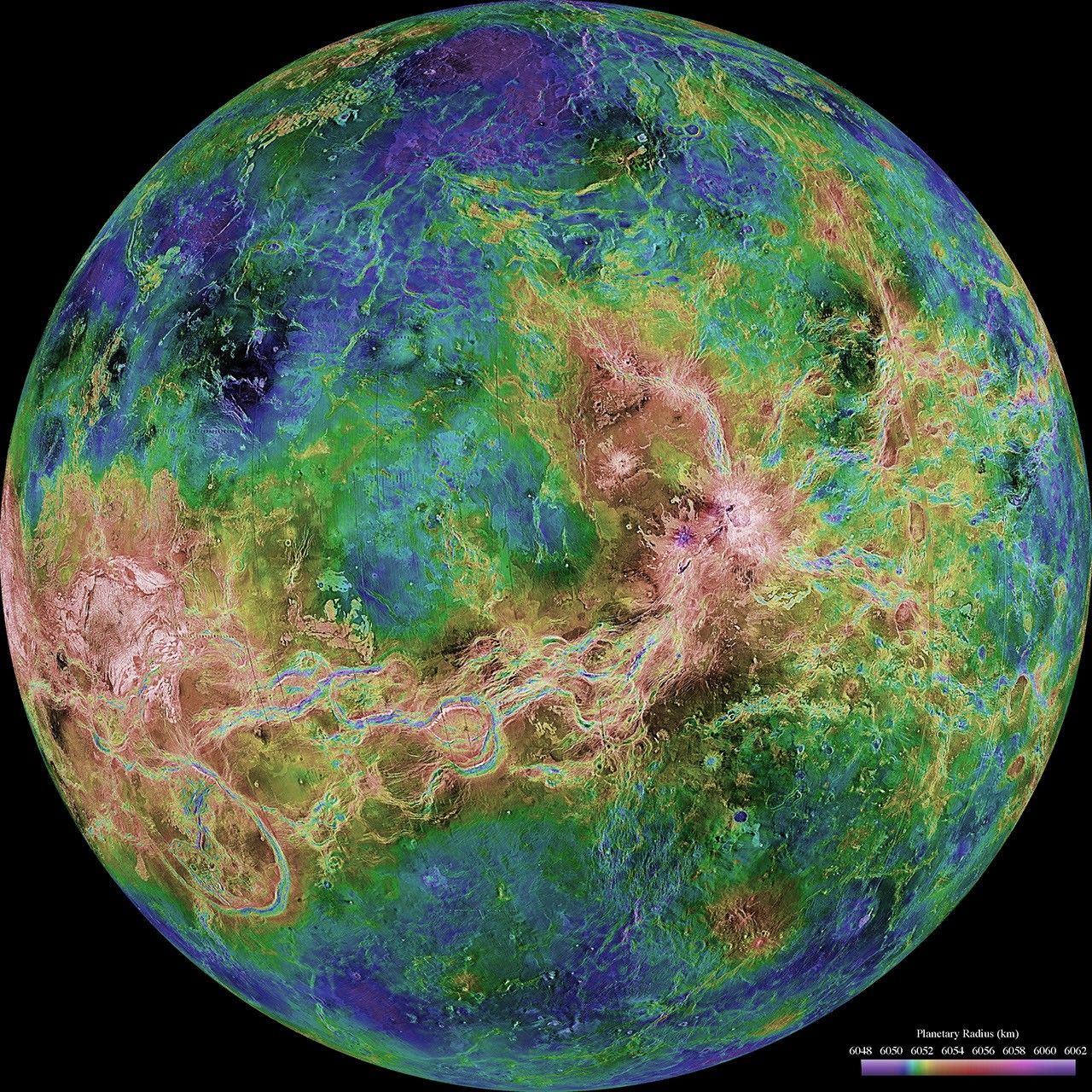
Radar Observations of Venus This hemispheric view of Venus was created using radar observations, including images from NASA's Magellan spacecraft. Magellan imaged more than 98% of Venus. Gaps in the Magellan coverage were filled with images from the Earth-based Arecibo radar. The composite image was processed to improve contrast and to emphasize small features, and was color-coded to represent elevation. Magellan launched on May 4, 1989, and was deployed from the cargo bay of Space Shuttle Atlantis on May 5, 1989. The spacecraft orbited Venus from Aug. 10, 1990, until Oct. 13, 1994 when the spacecraft was commanded to plunge into the atmosphere of Venus. - NASA

The second planet from the Sun, Venus is often called Earth’s “sister planet” because of their similar size and mass. But the similarities end there, Venus is the hottest planet in our solar system, with surface temperatures around 464°C (867°F) – hot enough to melt lead. This extreme heat comes from a runaway greenhouse effect caused by its thick atmosphere, which is about 96% carbon dioxide.

Uranus Simulation – Scientific Data Reference

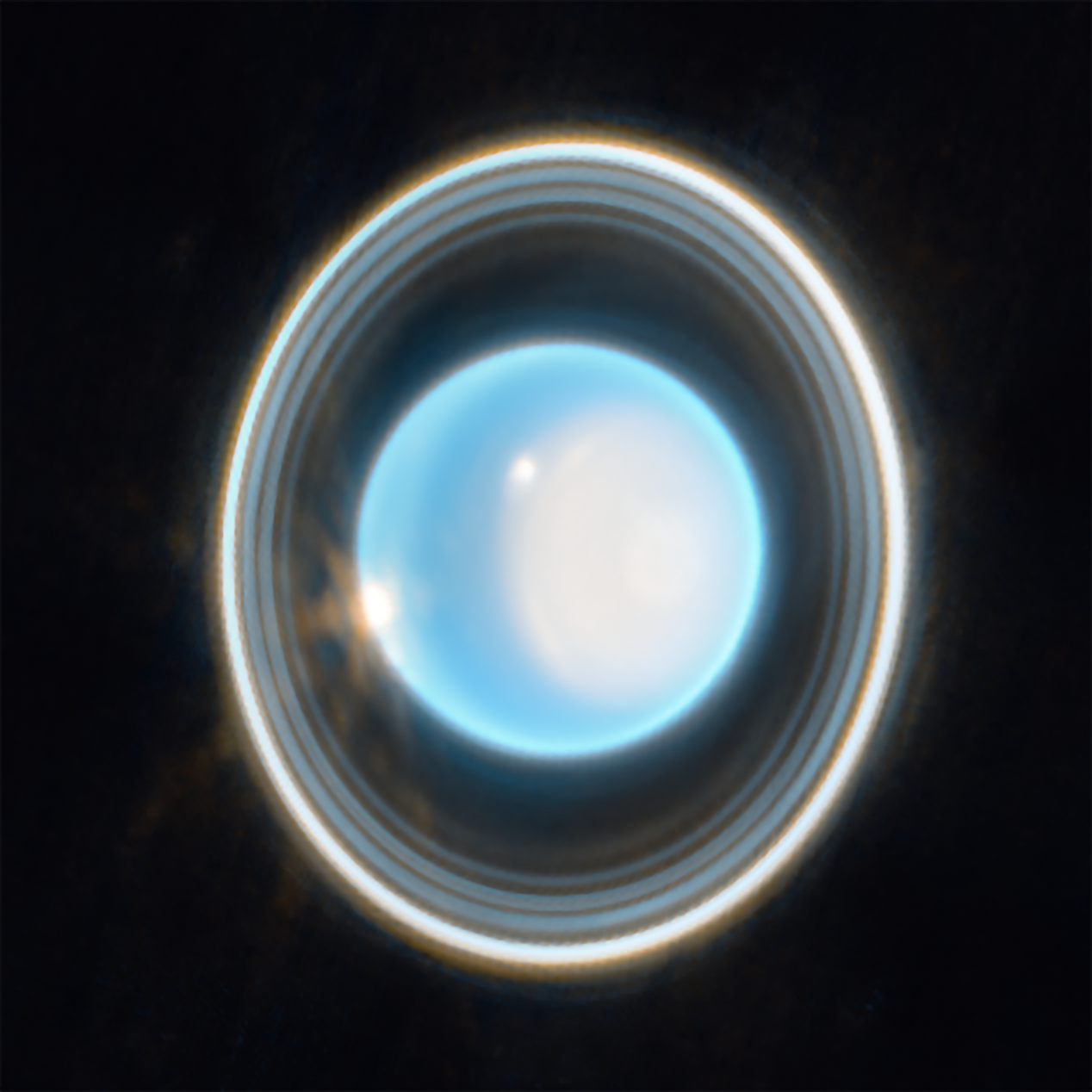
NasaNirCamUranus

Physical Properties, Atmosphere, Rings, and Moons Uranus is one of the most fascinating environments in our Solar System, full of dark mysteries, intrigue, and undoubtedly novel vacuum physics that we will learn about as we send probes and explore the outer regions of our Solar System. The most interesting aspects of Uranus are its retrograde … Read more

Neptune: The Nautical Sailor Planet at the Edge of the Solar System

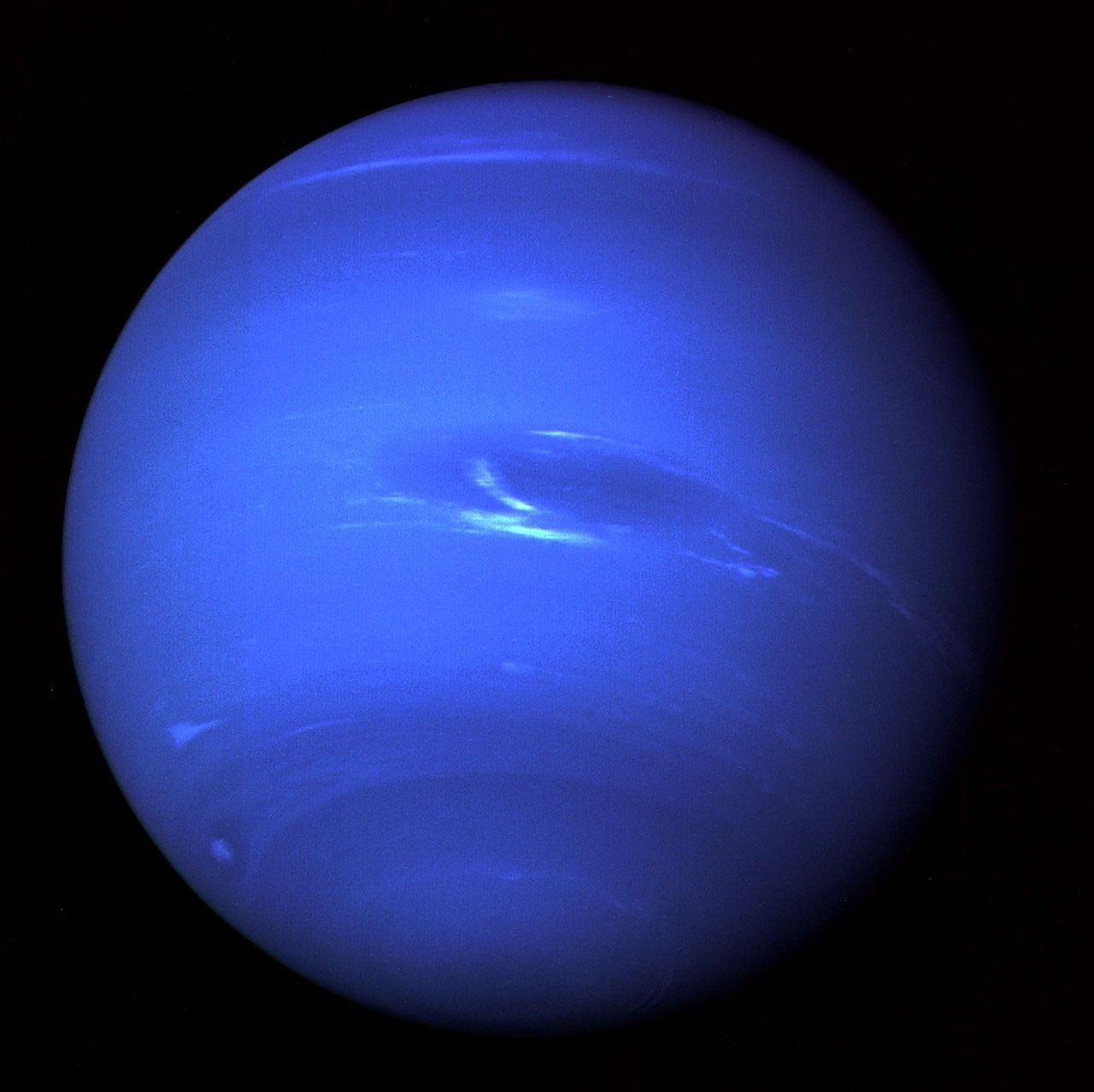
Neptune in ultraviolet blue, a Voyager2 image from 1989

Neptune is a fascinating system, continually forging the outer edges of our solar system. The gas giant’s orbit is littered with debris, dust and objects that travel through the Oort Cloud and into the Kuiper Belt and get caught in the gravity of the huge frozen gas giant. With a day lasting about 16 hours, … Read more

The S2 Star and Sagittarius A (orbital simulation)

S2 Orbital Analysis - Elliot Telford

I always like to learn about new concept and ideas, so this morning I woke up and just started to study frame dragging and relativistic effects on stars. I’ve been spending a lot of time with physics lately and have done a full Sagittarius A calculation, which turned out to be a fun way to … Read more

Modeling the Behaviors of Hydrogen

Hydrogen_Fusion_Reaction_Simulator

Presenting Elliot’s Hydrogen Fusion Simulator, V1.0.0 It is fairly well accepted that the future of energy will be nuclear. The concept of a Dyson Sphere was first developed by Olaf Stapledon in his science fiction novel Star Maker (1937). The idea was further developed by the physicist Freeman Dyson in his 1960 paper “Search for Artificial Stellar Sources of Infrared Radiation“. … Read more