


After nearly three weeks of development, recording gameplay, and putting together footage, I’m excited to share the second official gameplay trailer for Explore the Universe 2175!
This trailer represents a significant milestone in the game’s development. I’ve spent the past several weeks sprinting through new features, improving existing systems, and polishing the gameplay to capture something that I hope people will find genuinely impressive.
One of the biggest challenges wasn’t producing the trailer itself. It was getting the game ready to be filmed!
Fortunately, much of that work is now complete, which means producing future trailers should become considerably easier—and a lot more fun.
This new trailer is approximately two minutes long and showcases the game’s evolving combat mechanics, environments, characters, and visual identity. I’m also planning to break the footage into shorter videos for YouTube Shorts, TikTok, and Instagram Reels.
But first, let’s take a closer look at what I’ve been building.

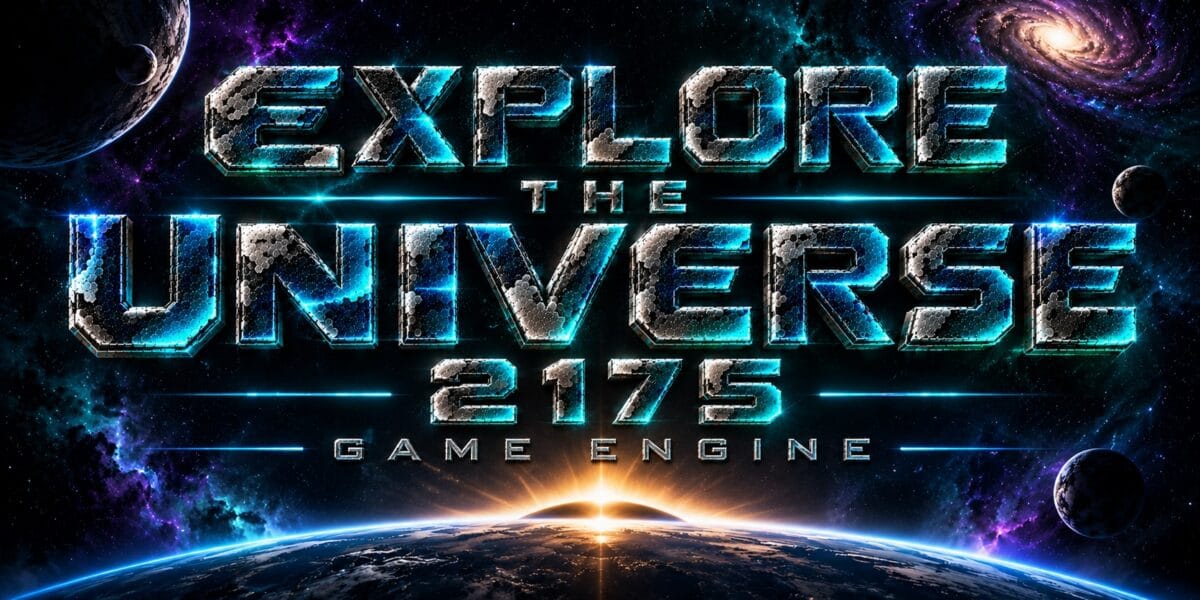
Explore the Universe 2175 Gets Custom 3D Typography
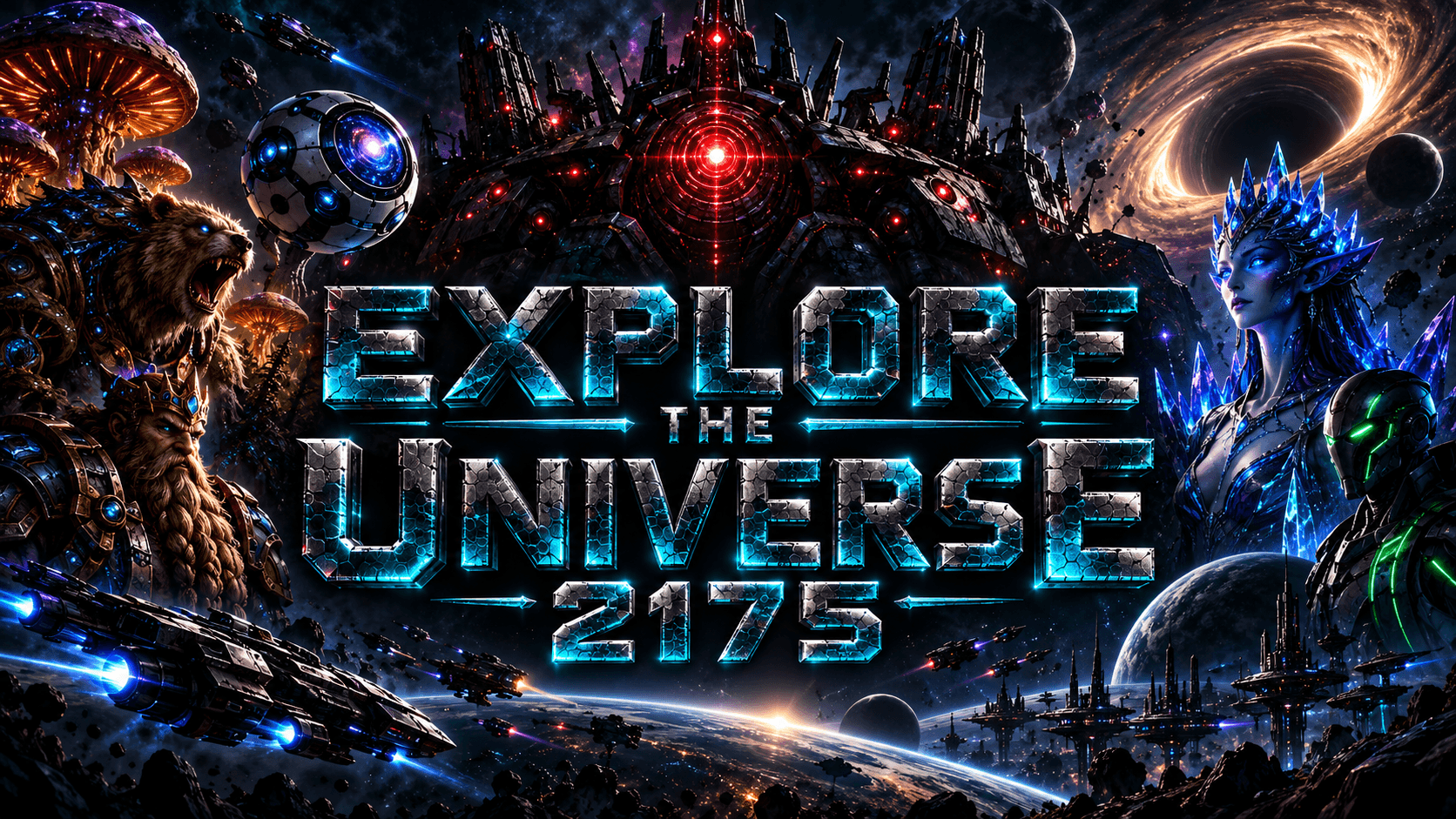
One of the most important steps in developing the visual identity of Explore the Universe 2175 has been creating its own custom typography.
Rather than relying on a conventional font, I’ve been developing the game’s lettering as individual 3D meshes with custom lighting and materials.
This opens up some interesting possibilities.
Because the letters are actual 3D objects, their appearance can evolve alongside the game’s rendering technology. I can introduce more sophisticated shaders, dynamic lighting, shadows, reflections, and other effects that make the typography feel like part of the game’s universe.
The goal is to create a recognizable visual identity that feels futuristic, cinematic, and distinctly Explore the Universe.
I think the results are beginning to take shape. The new typography gives the game a much more defined personality and helps establish a consistent identity across ExploreTheUniverse2175.com, Steam, YouTube, and other promotional material.
Sound Design: Building the Audio Universe
One feature I wasn’t quite able to finish in time for this trailer was the in-game sound.
However, sound design has become an increasingly important part of development.
I’ve been working extensively on the game’s sound effects, music, and cinematic audio production. There are now approximately 120 sounds in the game, many of which are already designed but still need to be connected to their corresponding gameplay events.
For example, the healing wave and tractor beam abilities both have new custom sound effects that I’m particularly excited about.
These aren’t featured in the current trailer, but they should help make the next one feel considerably more immersive.
My goal is to have a new trailer ready within the next couple of weeks, this time featuring much more of the game’s actual sound design.
Sound is especially important in a game like Explore the Universe, where acceleration, weapons, gravitational forces, and environmental hazards all contribute to the feeling of piloting a spacecraft through a dangerous universe.
Building the Core Gameplay Systems
Some of my favorite games of all time are Age of Empires II and StarCraft.
What makes these games so compelling to me is the relationship between resource collection, economic development, military production, and strategic decision-making.
Workers gather resources. Resources support buildings. Buildings produce units. Units expand your territory, protect your economy, and create opportunities for further development.
It’s a relatively simple concept that produces incredibly complex gameplay.
I’ve been working toward bringing some of these same principles into Explore the Universe 2175, but within a much larger, more open-ended environment.
Rather than focusing exclusively on constructing a base or commanding an army, I want players to be able to explore planetary systems, harvest resources, develop space stations, construct fleets, and interact with civilizations throughout the galaxy.
The underlying economy and crafting systems are still evolving, but the foundations are beginning to come together
Showing off the Visually Defined Mechanics of Explore the Universe
There are a couple of main algorithmic gameplay loops in Explore the Universe that I was able to architect. My favorite games are resources collection games, Age of Empires 2, and Starcraft. Both have a base economy produced by the amount of workers collecting specific resources that fuel the ability to make more buildings and units in the game. This is a core concept of Explore the Universe that is going to get built out more and more over time, but here is how the game currently holds up.
Explore the Universe 2175 Trailer on Youtube
Feeling Gravity in Explore the Universe
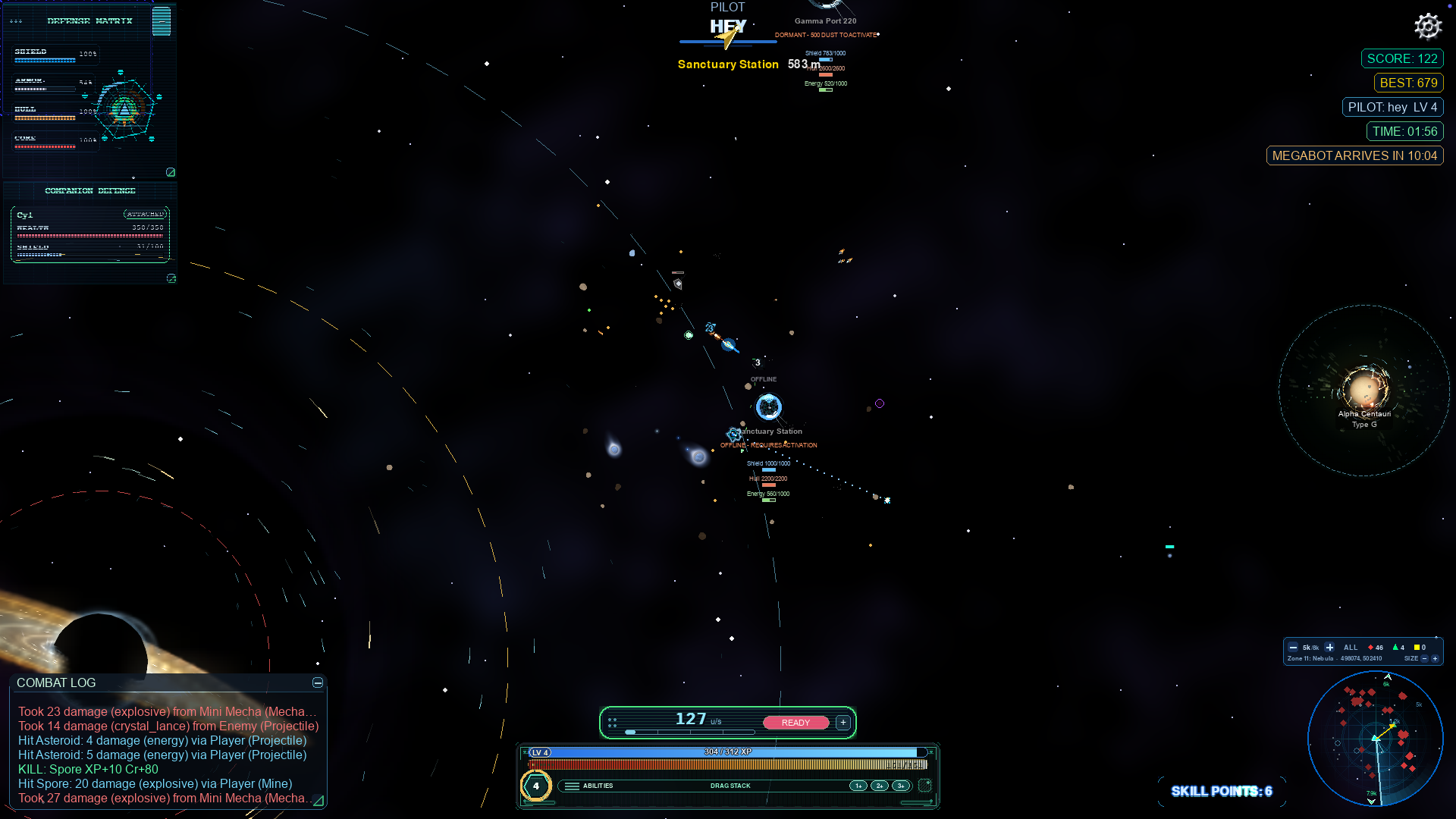
By far, one of my favorite aspects of the game is simply how it feels to fly the ship.
The spacecraft has an unusual combination of inertia, acceleration, and maneuverability. It feels slightly floaty, but it can also accelerate rapidly, boost through dangerous environments, and execute precise movements during combat.
I’ve spent a considerable amount of time working on this balance.
The ship’s laser system has also received significant improvements. The weapons are now faster and more powerful, with a rapid-fire mode that makes pursuing and destroying moving targets much more satisfying.
But the most interesting part of combat is the environment itself.
Stars and black holes exert gravitational forces that can pull spacecraft around the battlefield, fundamentally changing how players approach navigation and combat.
Asteroids, meteors, comets, and other celestial objects introduce additional hazards and opportunities.
An asteroid might become temporary cover during a firefight. A gravitational field might help you accelerate toward an enemy—or pull you into a dangerous situation.
Successful combat requires more than simply pointing your weapons at a target.
You need to understand your momentum, anticipate environmental hazards, and use the surrounding space strategically.
I intentionally designed the universe of Explore the Universe 2175 to be dangerous and sometimes hostile to the player.
Survival is part of the adventure.
AI Characters, Friends, and Enemies
One of the most exciting developments in modern game design is the possibility of creating characters with increasingly sophisticated autonomous behavior.
Agent-driven AI has the potential to fundamentally change how allies, enemies, and entire civilizations interact with players.
Imagine a battlefield where individual units have their own objectives, motivations, and decision-making processes.
Or a companion who remembers your interactions, develops opinions about your actions, and gradually changes their relationship with you.
These are some of the ideas I’m exploring with Explore the Universe 2175.
The game already contains a growing collection of characters, factions, and dialogue systems, and I want each major character to develop a distinct personality.
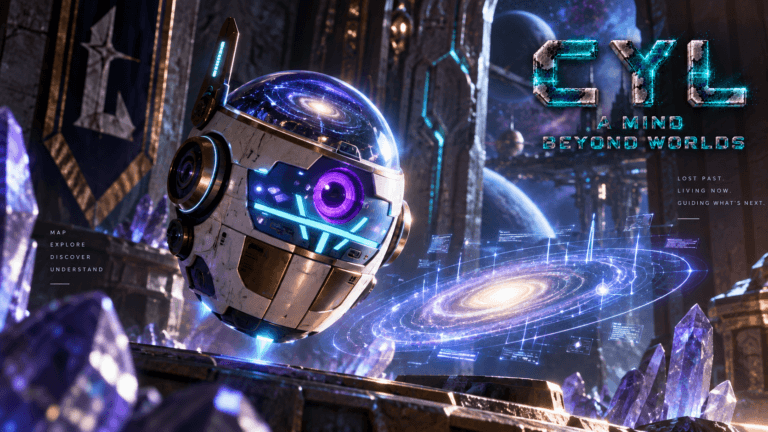
Perhaps the best example is Cyl, the player’s primary companion and guide.
I recently wrote a separate article exploring her design, personality, and functionality:
Creating Cyl: An AI Companion for Explore the Universe 2175
One of my long-term goals is to develop emergent dialogue that combines a character’s personality with the player’s actions and decisions.
Instead of following a completely predetermined narrative, characters could develop their own relationships and personality arcs through interactions with the player.
This would allow friendships, rivalries, and alliances to evolve dynamically throughout the game.
It’s an ambitious goal, particularly for Early Access, but the underlying dialogue architecture has already received substantial development.
I think the possibilities are enormous.
Inventory: One of the Game’s Oldest Systems
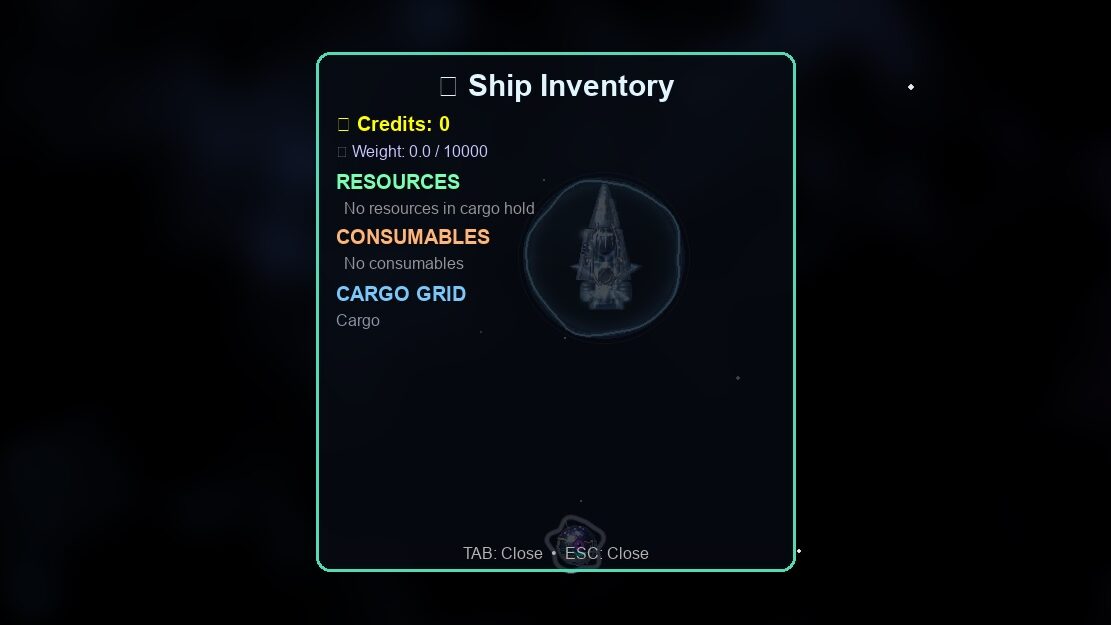
The inventory system is one of the oldest functioning systems in Explore the Universe 2175.
It’s nearly two years old now!
When I first started developing the game, I knew I wanted two important mechanics:
- Harvestable resources and collectibles distributed throughout the universe.
- A limited inventory system that would require players to make decisions about what they collect, carry, and use.
The resource collection system took approximately three months to build initially, and it remains one of my favorite parts of the game.
The idea is that resources should have practical value beyond simply accumulating points or currency.
Players should be able to collect materials, transport them, and eventually use them to craft equipment, construct ships, improve their stations, and develop their economy.
Inventory limitations also introduce meaningful choices.
Do you collect more raw materials? Save room for valuable components? Return to your station to unload cargo?
These decisions become increasingly important as the game’s economy expands.
Crafting: From Raw Materials to Spacecraft
The crafting system is currently one of the game’s largest areas of ongoing development.
My long-term vision is to allow players to construct everything from individual components and spacecraft upgrades to defensive installations, large capital ships, and entire fleets.
The basic economy and exploration infrastructure are already taking shape.
The next major steps involve expanding mining operations around space stations, developing trade networks, and connecting resource production to the construction of new units.
Eventually, I want players to be able to establish their own industrial infrastructure.
That means collecting resources, processing materials, manufacturing components, and using those components to build increasingly sophisticated technology.
Space Stations: Defensive Networks and Sanctuaries
Interestingly, I never originally intended Explore the Universe 2175 to incorporate tower-defense mechanics.
But the more I worked on the game, the more I realized how useful defensive structures could be.
I’ve always enjoyed building defensive positions in strategy games, particularly when they provide meaningful protection for a growing economy.
In Explore the Universe, your home station serves as a command center, sanctuary, and primary defensive position.
The idea is to give players a place to develop their capabilities without constantly forcing them into increasingly difficult combat encounters.
Over time, players should be able to strengthen their stations, construct defensive networks, and establish secure areas of influence.
This also creates opportunities for more strategic gameplay.
Rather than relying exclusively on the player’s spacecraft, defensive installations and allied units could help protect important resources and infrastructure.
Resources as Crafting Components
Resource collection is intended to support nearly every major aspect of the game’s economy.
Materials gathered throughout the universe can eventually be used to construct ships, manufacture station workers, repair equipment, enhance spacecraft, and expand station infrastructure.
The crafting system follows a basic production hierarchy:
Raw Resources → Components → Parts → Equipment, Ships, and Structures
This allows relatively simple materials to become the foundation of increasingly sophisticated technology.
For example, a mining operation might produce raw materials that are processed into components, assembled into spacecraft parts, and ultimately used to construct a new ship.
I’m particularly interested in allowing players to customize their equipment and units rather than limiting them to a small collection of predetermined designs.
This is one of my favorite systems to develop, and I intend to document its mechanics in considerably more detail as the game progresses.
Buildings, Capital Ships, and Player-Controlled Fleets
The next major stage of development involves expanding the relationship between buildings, resource production, and military units.
My goal is to give players the ability to construct their own fleets and develop different strategies for exploring, defending, or conquering parts of the galaxy.
Buildings will become increasingly important because they will support the production of specialized units and infrastructure.
Players might focus on mining and trade, construct heavily defended stations, develop powerful offensive fleets, or pursue a combination of these strategies.
I want the game to encourage experimentation rather than impose a single correct way to play.
You might cooperate with neighboring civilizations, build alliances, establish trade networks, or attempt to expand your influence through military conquest.
The universe should respond to those decisions.
Ultimately, I envision players commanding fleets of customized spacecraft, maintaining networks of stations, and participating in conflicts involving multiple civilizations.
The foundations are being developed now, and I’m excited to see how these systems evolve.
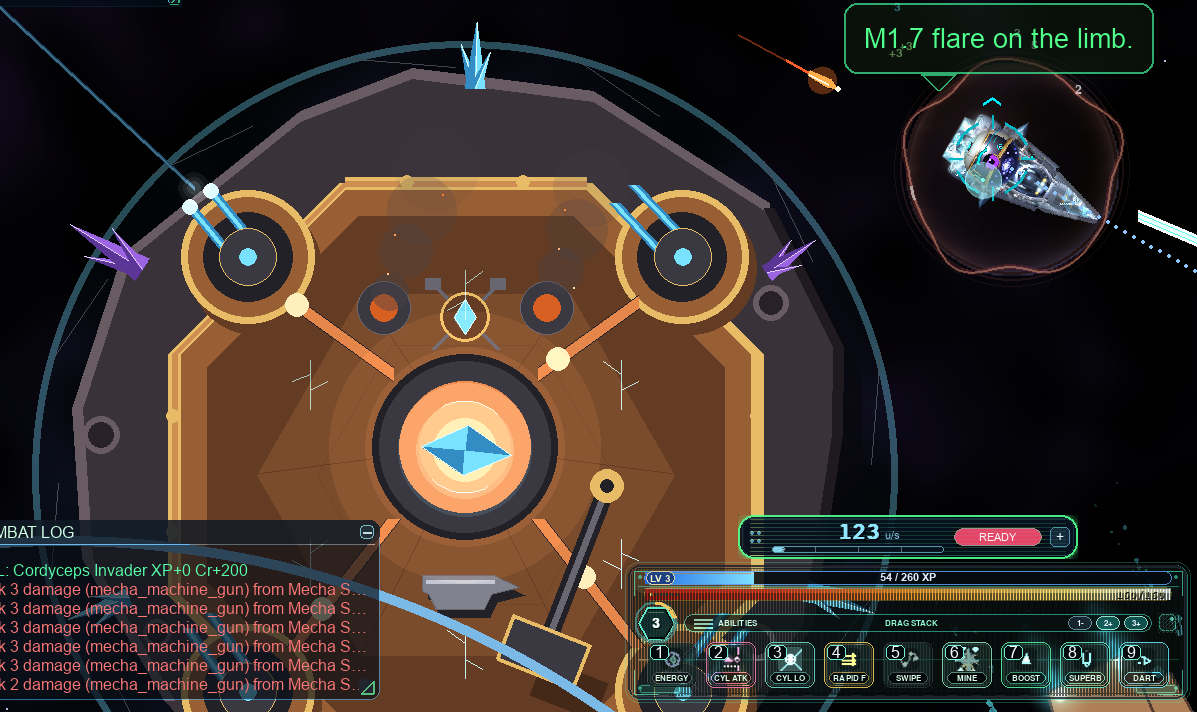
Explore the Universe Bosses: A Secret for Now…
-> Head on over to Steam and Wishlist the game to support it (and me!) <-
What’s Next for Explore the Universe 2175?
Finishing this second gameplay trailer feels like an important milestone.
A considerable amount of development went into preparing the game for recording, and that work has left me with a much stronger foundation for future gameplay demonstrations.
Over the coming weeks, I’ll be focusing on expanding the sound system, improving crafting and resource production, and continuing to develop the game’s characters, ships, and environments.
I’ll also be producing shorter gameplay videos that highlight individual mechanics and features.
There’s still an enormous amount I want to build, but the universe is beginning to feel increasingly alive.
And that’s really what makes this project exciting for me.
I don’t want Explore the Universe 2175 to be a game where everything follows a predetermined path.
I want to create a universe where players can explore, experiment, build, fight, make friends, and discover their own adventures.
Watch the new trailer, and if you’re interested in following development, please consider adding Explore the Universe 2175 to your Steam wishlist!