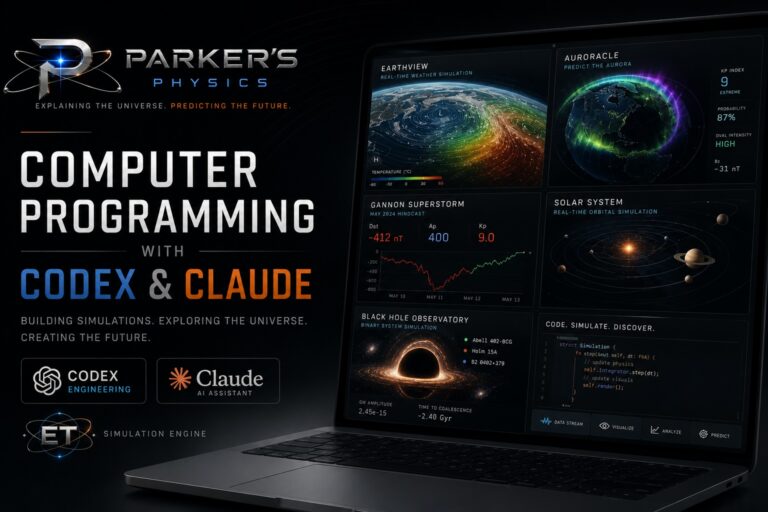

A Real-Time Space Weather & Solar Simulation Platform
A live interface for understanding the Sun, Earth, and the dynamic physics of our universe.
“To understand the Earth-Sun Space environment so that humanity can venture forth into the cosmos.”
What Is Parker’s Physics?
There’s a gap between how we visualize our reality and how it actually is. Our minds are not equipped to understand it; especially once we begin to zoom out way beyond our Solar System.
Our brains weren’t built to intuit:
- solar plasma dynamics
- orbital mechanics
- electromagnetic 3D interactions across space
And yet—these systems are constantly shaping our world.
Most existing tools give you:
- static visualizations
- delayed datasets
- simplified models
But reality is not static.
It is:
- plasma flows
- magnetic field interactions
- solar eruptions
- gravitational systems evolving in real time
But this dissonance is especially true of the Sun, the Moon, and the ocean. Our world is so large, our primate evolved brains aren’t built to understand it.
Parker’s Physics is built to visualize that reality—live.
Most tools give you static models, delayed datasets, or simplified approximations. But reality is a dynamic—plasma flows, magnetic fields twist, stars erupt, and entire nebular systems evolve continuously.
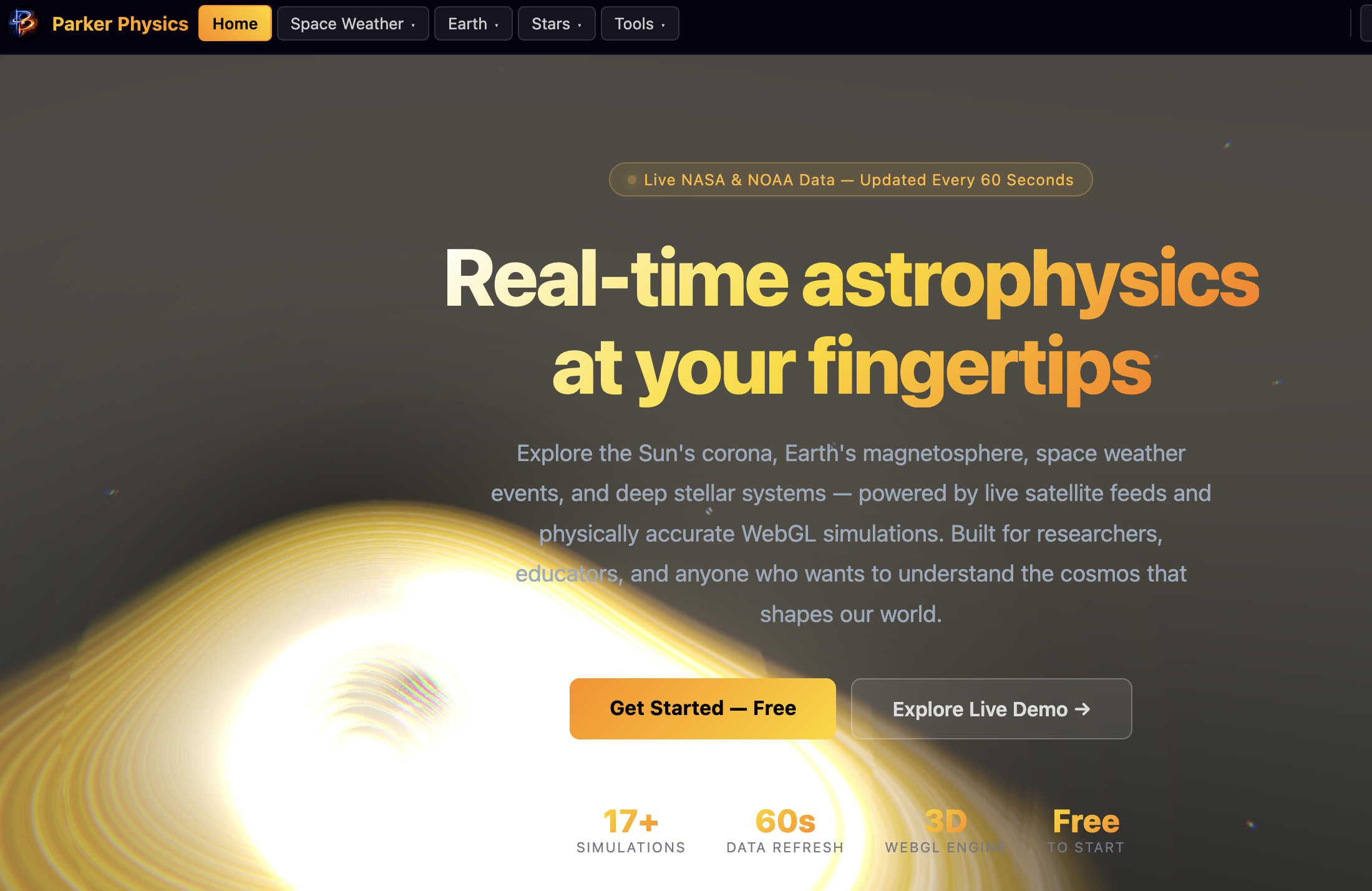
Parker’s Physics is built to visualize the reality of the universe. And how that might affect your day. Especially if you are an astronaut or satellite operator.
👉 Visit: https://www.parkersphysics.com for the live demo.
Parkers Physics Primary Features:
☀️ 1. Real-Time Solar Activity & Space Weather
- Solar flare detection and prediction modeling
- Magnetic field (flux rope) analysis
- Sunspot lifecycle tracking
- Prominence and plasma arc simulation
- Live solar data integrations
- Machine learning-based flare forecasting
This is an early-stage solar prediction engine.
🌍 2. Earth–Sun Interaction Modeling
- Magnetosphere simulation
- Ionosphere response tracking
- Solar wind propagation modeling
- Van Allen radiation belt monitoring
- Lagrange point system analysis
Understand how solar events actually impact Earth systems.
🪐 3. Real-Time Solar System Simulation
- NASA-powered ephemeris data
- Planetary and lunar positioning
- Orbital precession analysis
- Predictive orbital modeling
- Trajectory and mission planning tools
This transforms the solar system into a navigation and prediction engine.
🌌 4. Galactic & Black Hole Simulation
- Sagittarius A* environment modeling
- S-star orbital simulations
- Frame-dragging and relativistic effects
- Galactic positioning and mapping
- Black hole emission analysis
This is where visualization meets astrophysics research.
🛰️ 5. Satellite Tracking & Space Debris Monitoring
- Real-time satellite positioning
- Orbital decay and debris tracking
- Collision awareness systems (in development)
Critical for the future of:
orbital safety
space infrastructure
communications
To Understand and Travel into the Cosmos
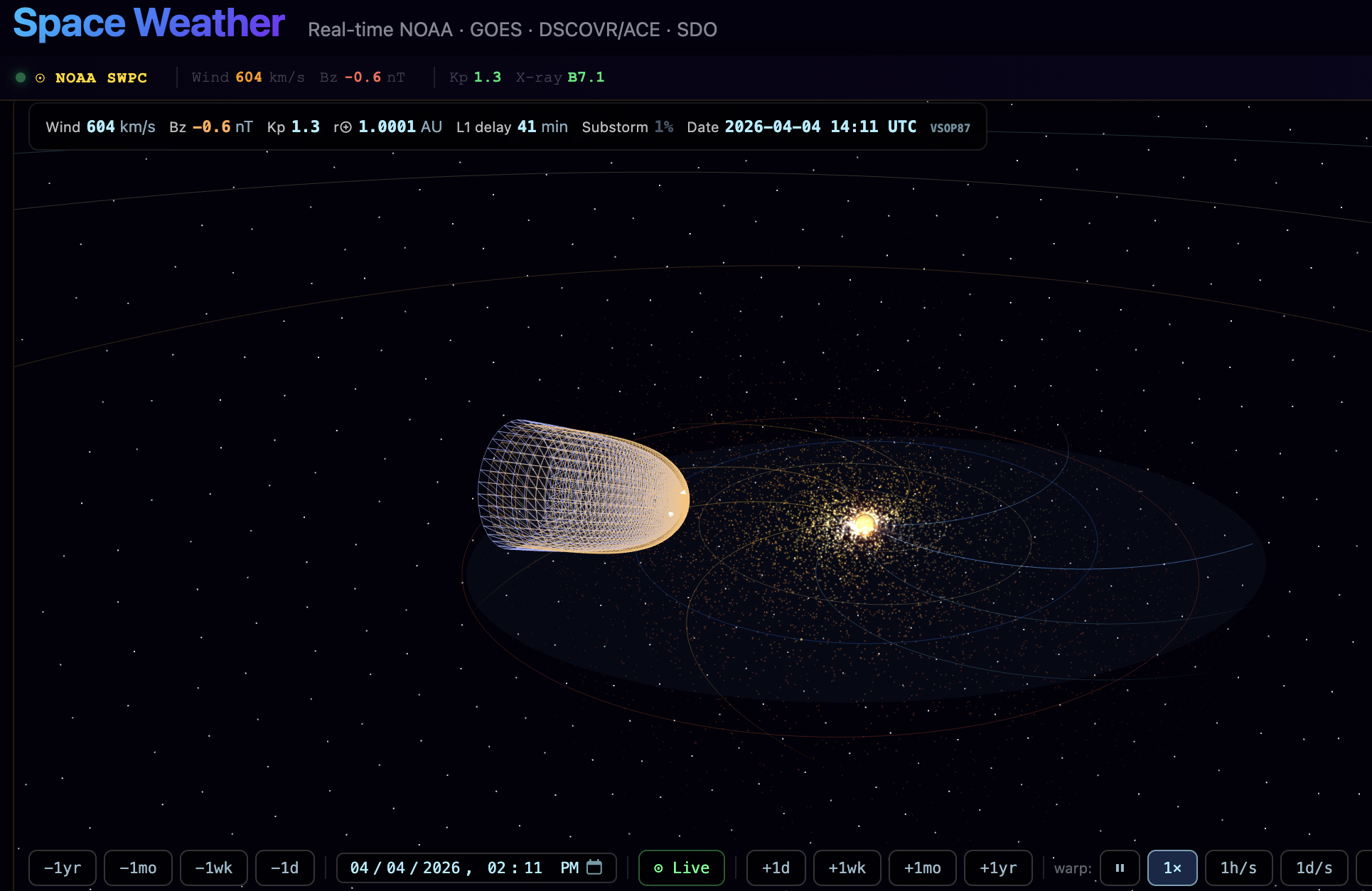
Parker’s Physics is not just a visualization tool.
It’s a real-time Space Weather Prediction Physics Engine for the observable universe. Especially our local planetary systems.
Parker Physics is a data exploration platform where:
- Solar activity is tracked and interpreted as it happens
- Earth’s atmospheric layers respond dynamically
- Orbital mechanics are predicted—not just displayed
- Galactic structures can be explored as living evolving systems over time
This is the beginning of a continuous simulation layer between reality and our understanding.
☀️ Solar Behavior Analysis
A New Age of Simulation Physics
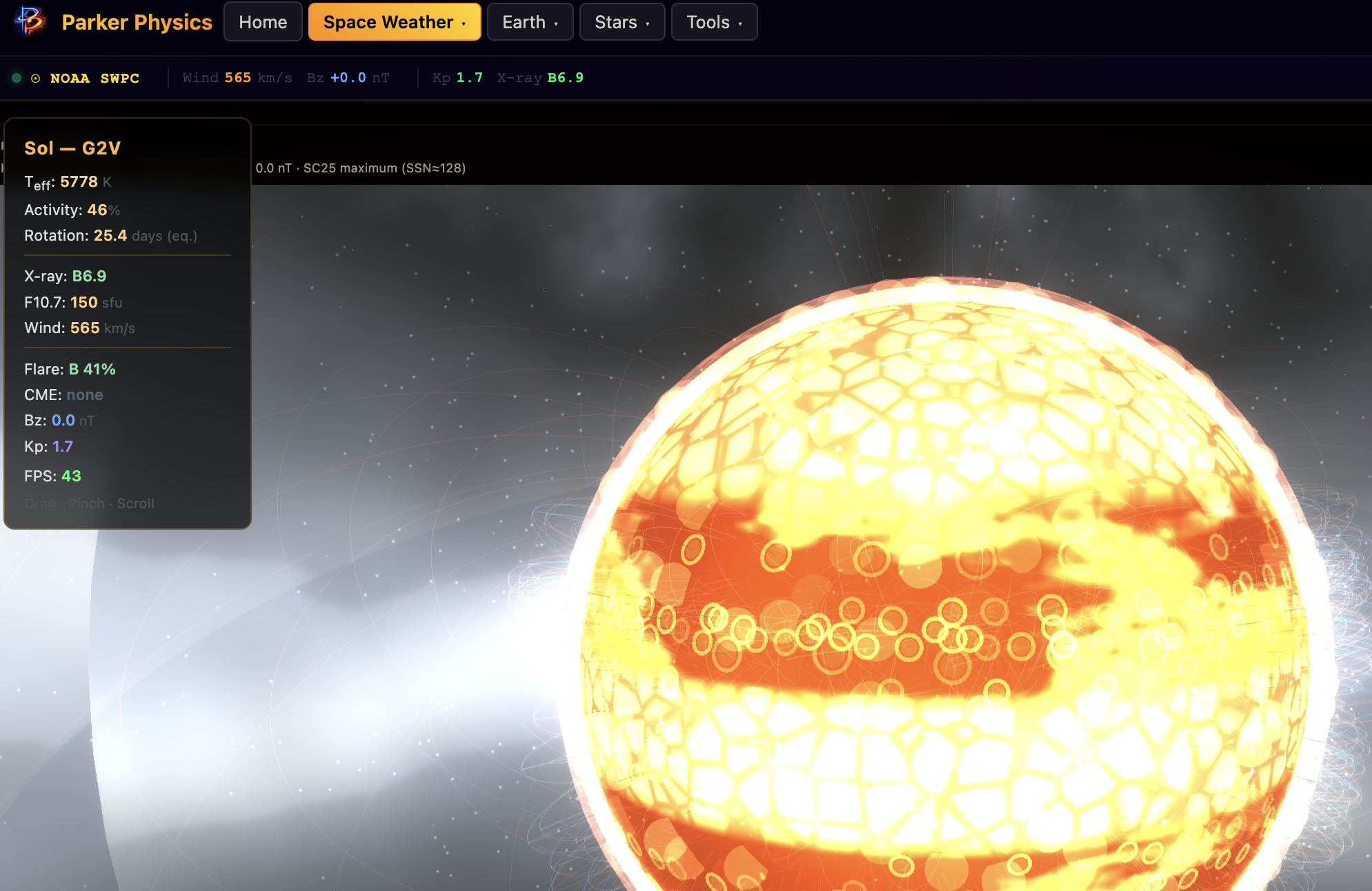
At the core of Parker’s Physics is a deep focus on Solar Dynamics—which is still a mystery to us. We are actively studying the dynamics of it. But thanks to Eugene Parker, after whom the app is named, we have a good basic understanding of the physics to explore the actual behaviors of our star and how the sheets of plasma erupts from the corona-sphere. We’re hoping to have a live prediction engine accurate to within one week of flare occurrences by the end of the year.
Key Capabilities:
- Flux rope analysis in real time Track magnetic field twisting and plasma structures before eruption events
- Prominence modeling Visualize large-scale plasma arcs and instability evolution
- Sunspot (dark spot) tracking Monitor active regions and their lifecycle
- Flare and emission zone detection Identify where energy is building—and where it will release
- Live data integrations Pull from real observational pipelines
- Custom machine learning predictions Forecast solar events before they occur
This is an early-stage predictor of stellar behavior.
🌍 Earth’s Real-Time Simulation
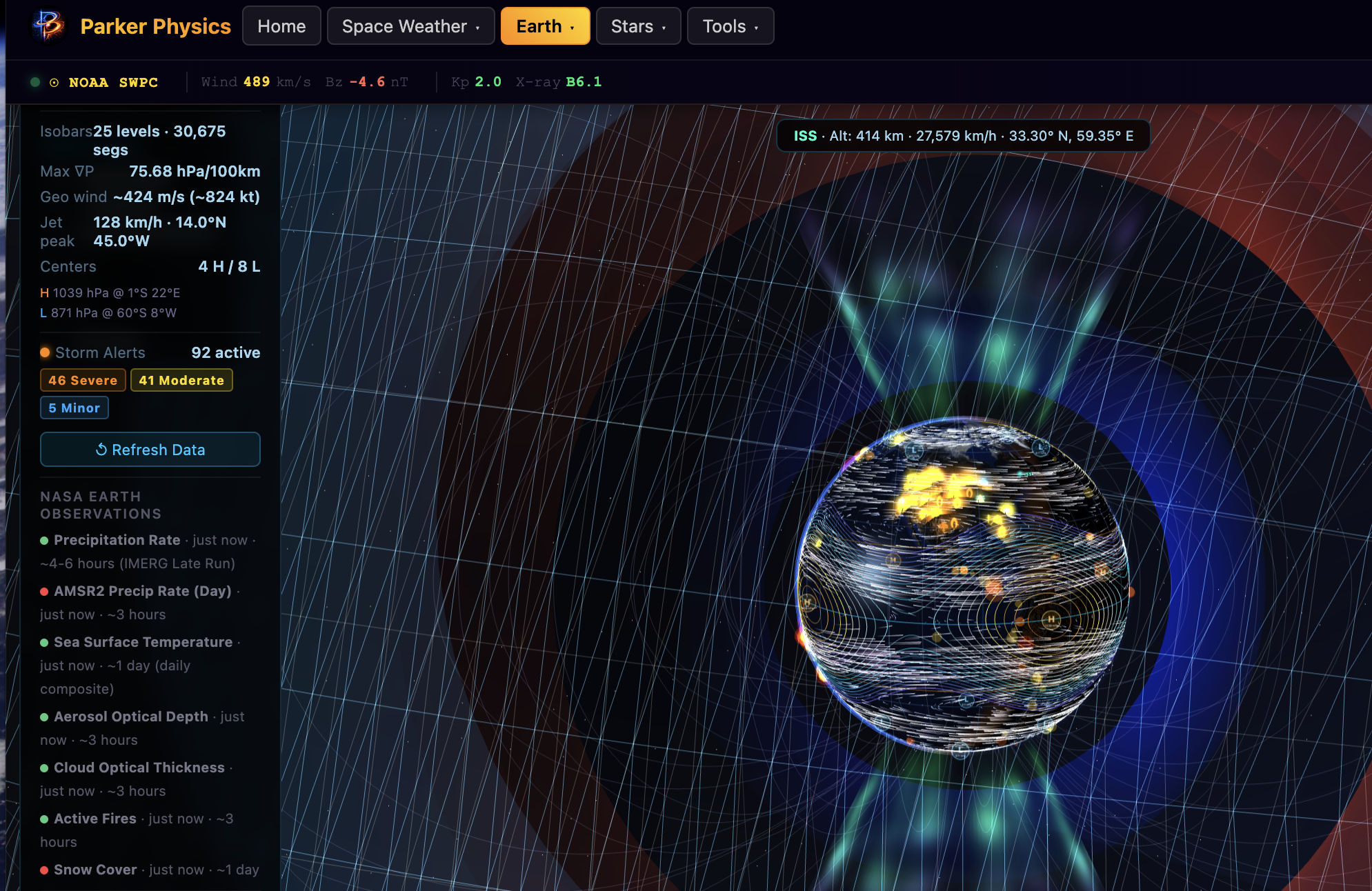
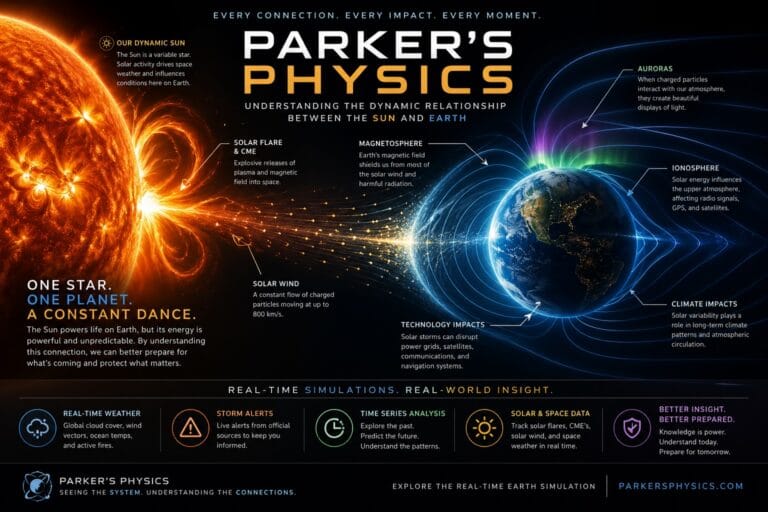
Solar activity doesn’t stop at the Sun—it propagates outward and directly impacts Earth.
Parker’s Physics models how that interaction unfolds.
System Layers:
- Magnetosphere modeling Simulate solar wind interaction and magnetic shielding
- Ionosphere dynamics Track charged particle effects and communication impacts
- Exosphere modeling Understand the outermost boundary of Earth’s atmosphere
- Lagrange point systems Analyze gravitational equilibrium zones and satellite positioning
- Van Allen radiation belt monitoring Observe high-energy particle regions in real time
This creates a continuous chain from solar event → Earth impact → atmospheric response.
🪐 Solar System Real-Time Positional Analysis
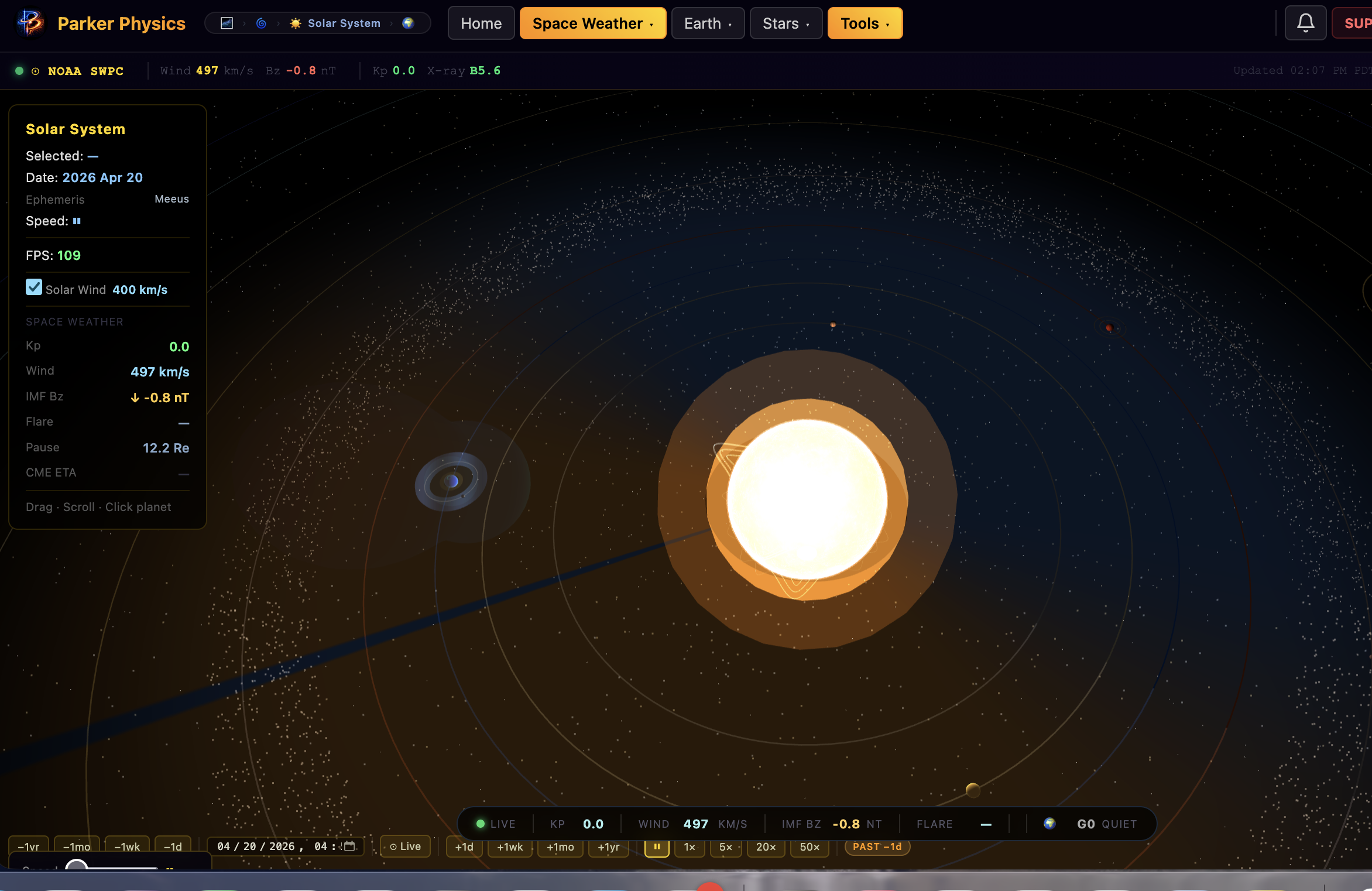
Understanding space requires knowing where everything is—and where it’s going.
Features:
- NASA ephemeris-powered positioning Precise real-time locations of planets and moons
- Full solar system tracking Every major body, continuously updated
- Machine learning orbital prediction Anticipate future positions and interactions
- Orbital precession analysis Detect long-term orbital drift and perturbations
- Mission planning tools Explore trajectories and future alignment windows
This turns the solar system into a predictive navigation map, not just a diagram.
🌌 Galactic Local Cluster Analysis
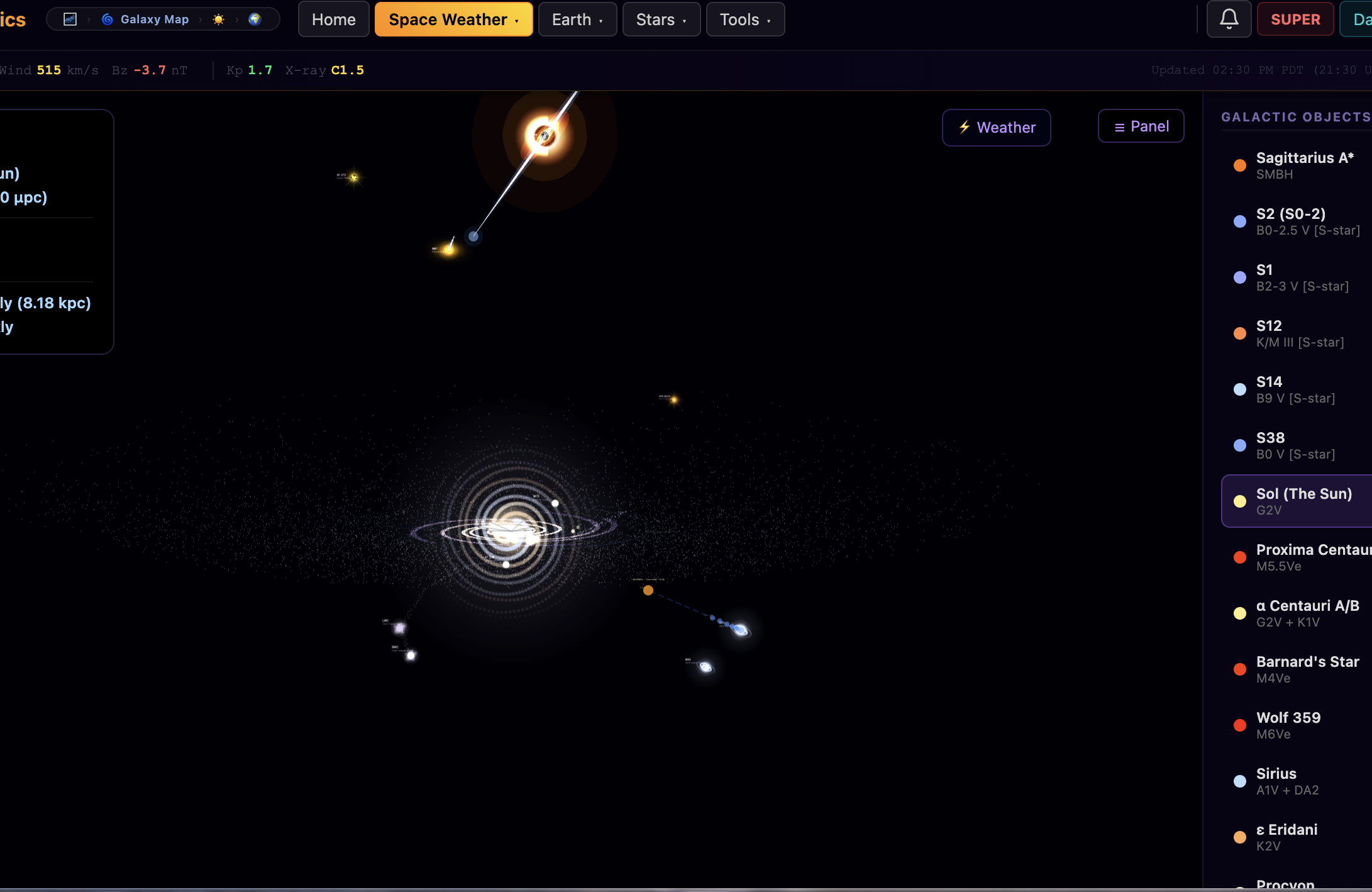
Parker’s Physics extends beyond the solar system into the local galactic environment.
Capabilities:
- Earth–Sun positional context in the galaxy
- Distance mapping to nearby stellar objects
- Sagittarius A* simulation environment
- S-star orbital simulations
- Frame dragging
- Relativistic plasma dynamics
- Black hole emission analysis
- Real-time galactic center modeling
This is where visualization meets relativistic astrophysics.
Satellite Trajectory Analysis and Space Trash & Debris Tracker
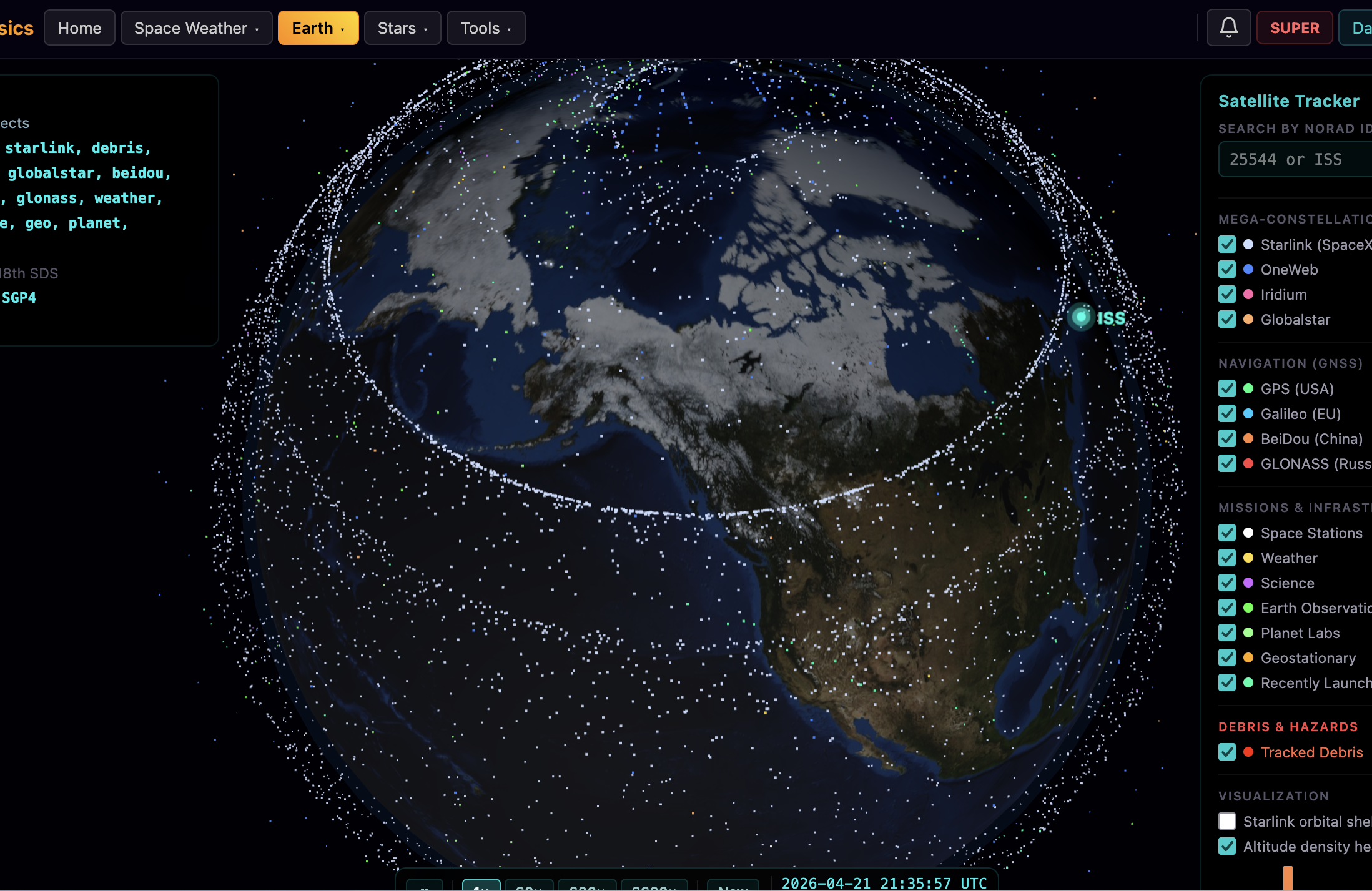
Coming soon! Parkers Physics Space Mission Planner
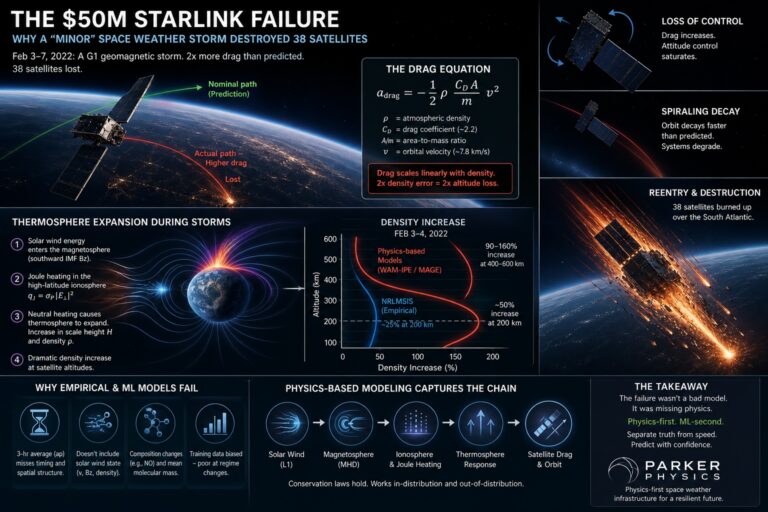
We will start with some live real time simulations of current NASA space missions, and begin to prepare for more space mission planning capacity. We are expanding into everything from launch, to sustaining orbit, to transferring orbits and simulating atmospheric drag. Check back next week!
Parker’s Physics Use Cases
We are entering a world where:
- Space weather affects infrastructure (especially data-centers)
- Orbital prediction drives exploration and defense
- Simulation becomes more valuable than static observation
Parker’s Physics is designed as a foundation layer for that future.
It’s a tool for:
- Developers building simulation systems
- Researchers exploring dynamic astrophysics
- Space Mission Planning and Launch Scheduling
- Creators visualizing the universe in real time
- Data scientists and AI engineers
- And anyone who wants to understand space as a living system
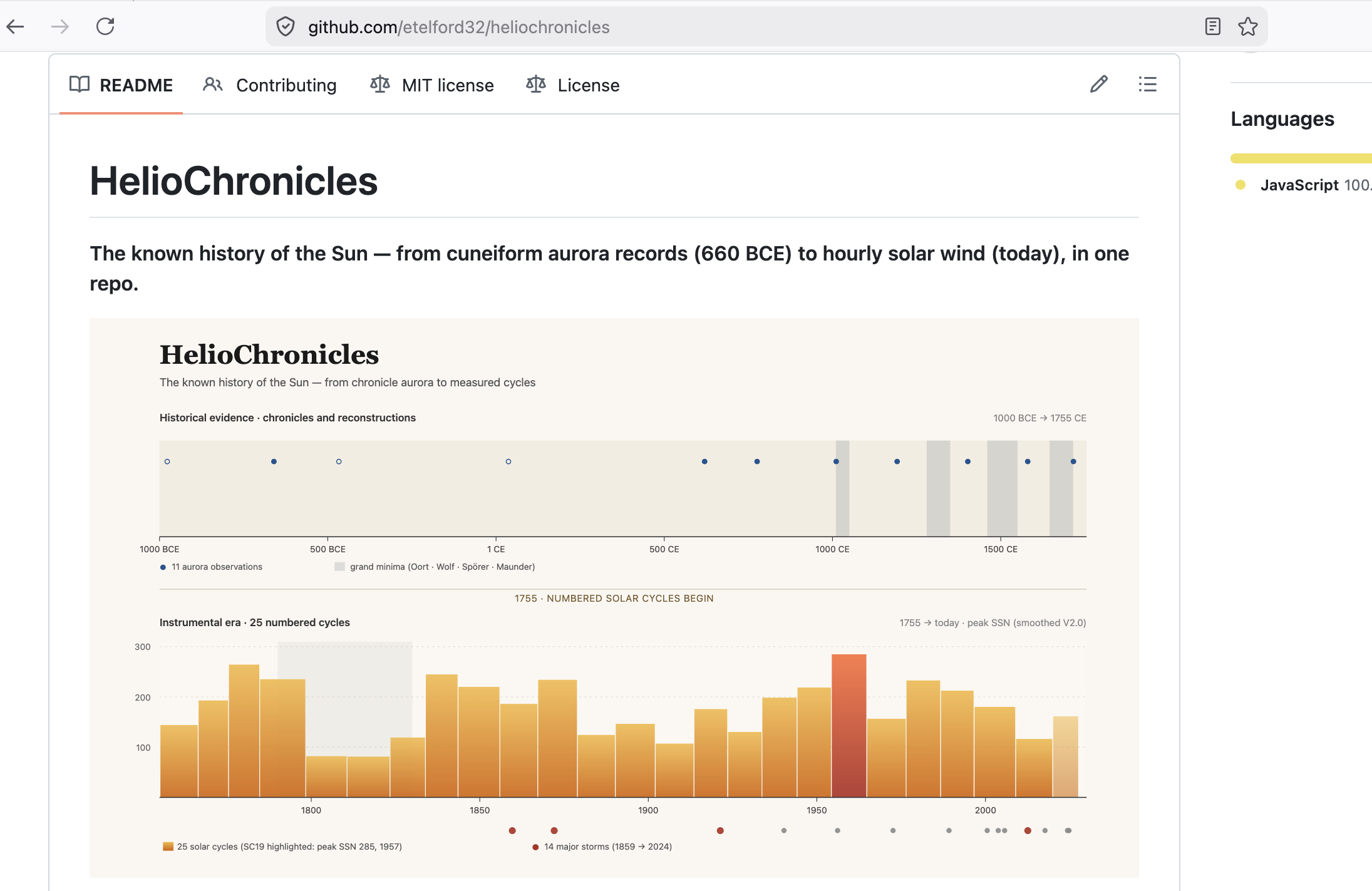
Powered by HelioChronicles
an open source, public access repository containing historical solar data for advanced predictive modeling.
The Bigger Direction
This is just the beginning.
Parker’s Physics is being built alongside larger systems—
including simulation environments, predictive modeling pipelines, and integrations into interactive experiences like:
Explore the Universe 2175 – out September 30th 2026 on Early Access on Steam.
Where real physics doesn’t just inform gameplay—it becomes the gameplay.
Try It
👉 https://www.parkersphysics.com
This is version one of something much bigger.
A real-time interface between data, simulation, and reality.
Final Note
If you’ve ever wanted to:
- Predict solar storms before they hit
- Understand how Earth reacts to space
- Navigate the solar system dynamically
- Or explore the physics of black holes
This is just the start.
A Note on Eugene Parker
Parker’s Physics is named after Eugene Parker, whose work defined our understanding of:
- the solar wind
- heliophysics
- plasma behavior in space
His research fundamentally changed how we understand the Sun.

This platform continues that direction—
by making those dynamics visible, interactive, and predictive.