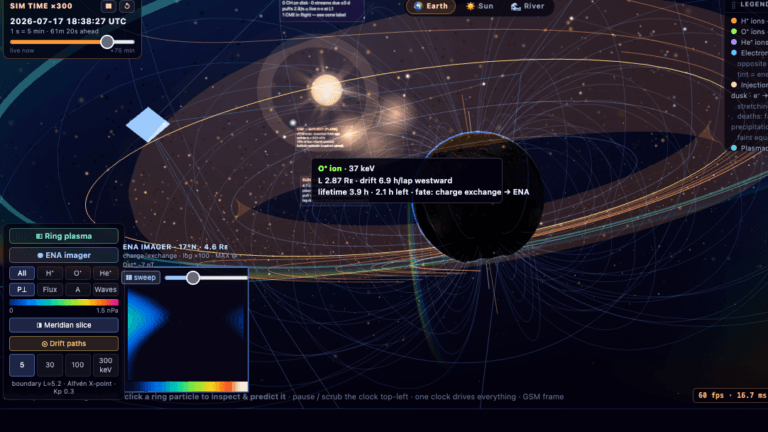

Venus is a fascinating planetary system that is often confused for a star in the sky, as it is generally the brightest and largest object in the sky around Dusk and Dawn. The second planet from the Sun is much closer to the Sun than we are, so we see it a lot in the sky. Its very bright due to its incredible atmosphere, which you can view below in the simulation I made with Claude.
The second planet from the Sun, Venus is often called Earth’s “sister planet” because of their similar size and mass. But the similarities end there, Venus is the hottest planet in our solar system, with surface temperatures around 464°C (867°F) – hot enough to melt lead. This extreme heat comes from a runaway greenhouse effect caused by its thick atmosphere, which is about 96% carbon dioxide. It is an excellent laboratory for atmospheric physics and studying it adds thoroughly to our understanding of the dynamics of our own climate and how Carbon Dioxide affects the surface of a planet, as well as the temperature.
Venus Atmospheric Simulation
The atmospheric pressure on Venus is crushing – about 92 times that of Earth’s surface, equivalent to being 900 meters underwater. The planet is also shrouded in thick clouds of sulfuric acid, which reflect sunlight so effectively that Venus is the brightest natural object in our night sky after the Moon.
Volcanism
[11] Scientists suspect that there are four volcanoes that may be active on Venus: Maat Mons, Ozza Mons, Sapas Mons and Idunn Mons.[12][13][14]
Maat Mons (Highest Volcano on Venus)
- Height: ~8 km (higher than Olympus Mons relative to local terrain but smaller in volume)
- Location: Atla Regio
- Why it matters:
- Likely still active. Recent thermal anomalies + atmospheric SO₂ spikes.
- Has gigantic lava channels and huge calderas.
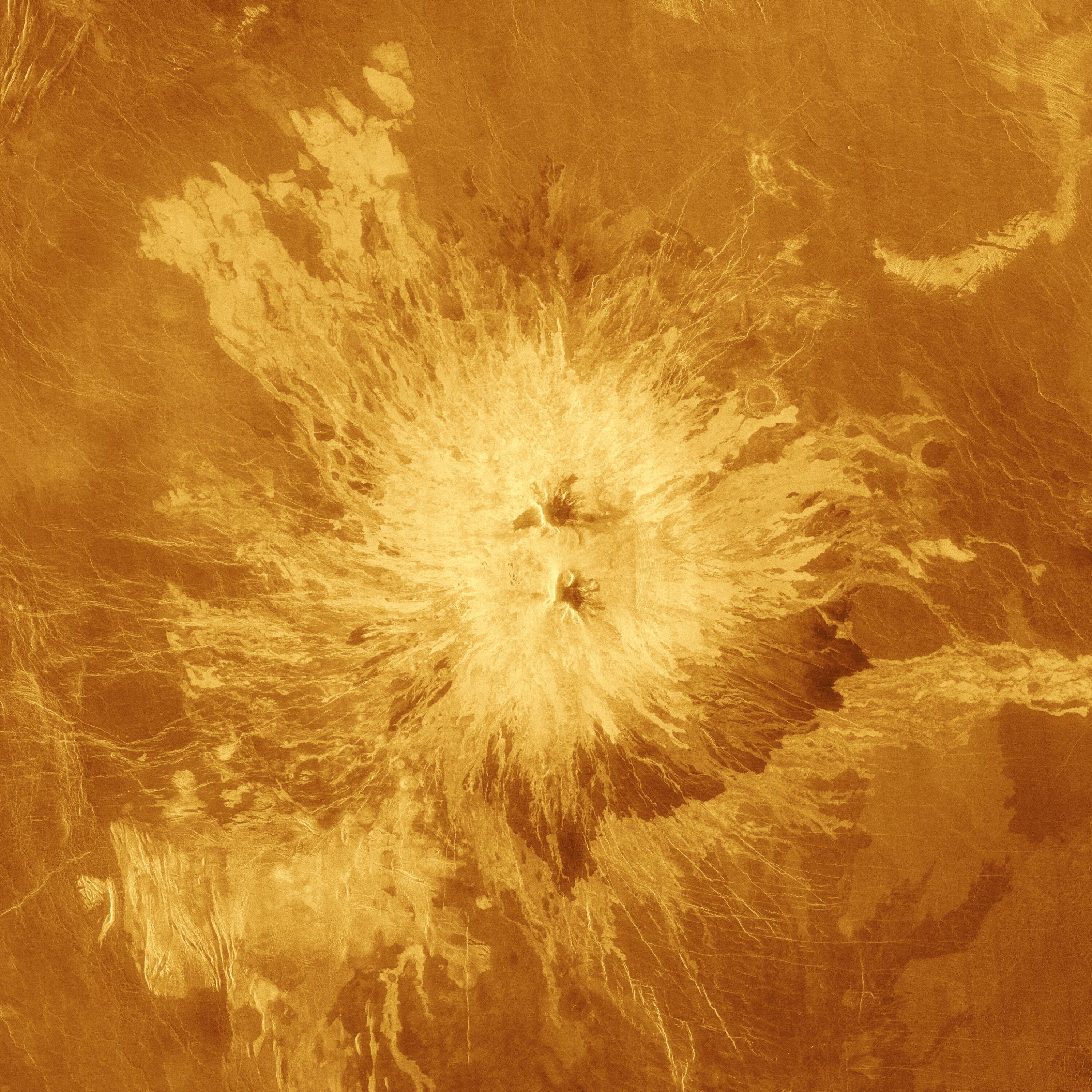
Sapas Mons
- Height: ~4 km
- Location: Atla Regio
- Why it matters:
- Twin-peaked shield volcano with enormous lava flows extending hundreds of km.
- Surface looks geologically “young” — possibly erupted in the last few million years.
Ozza Mons
- Height: ~5 km
- Location: Near Atla Regio (close to Maat Mons)
- Why it matters:
- One of the most massive volcanoes on Venus.
- Connected to rift systems and possible ongoing mantle plume activity.
Idunn Mons
- Height: ~2.5 km
- Location: Imdr Regio
- Why it matters:
- One of the leading candidates for current eruptions.
- Venus Express detected hot spots + fresh-looking lava flows.
Maxell Montes (Not a volcano, the highest mountain)
- Height: ~10.8 km
- Why it’s here:
- It’s not volcanic, but its elevation rivals the major volcanic edifices, and it’s part of the extreme Venusian topography.
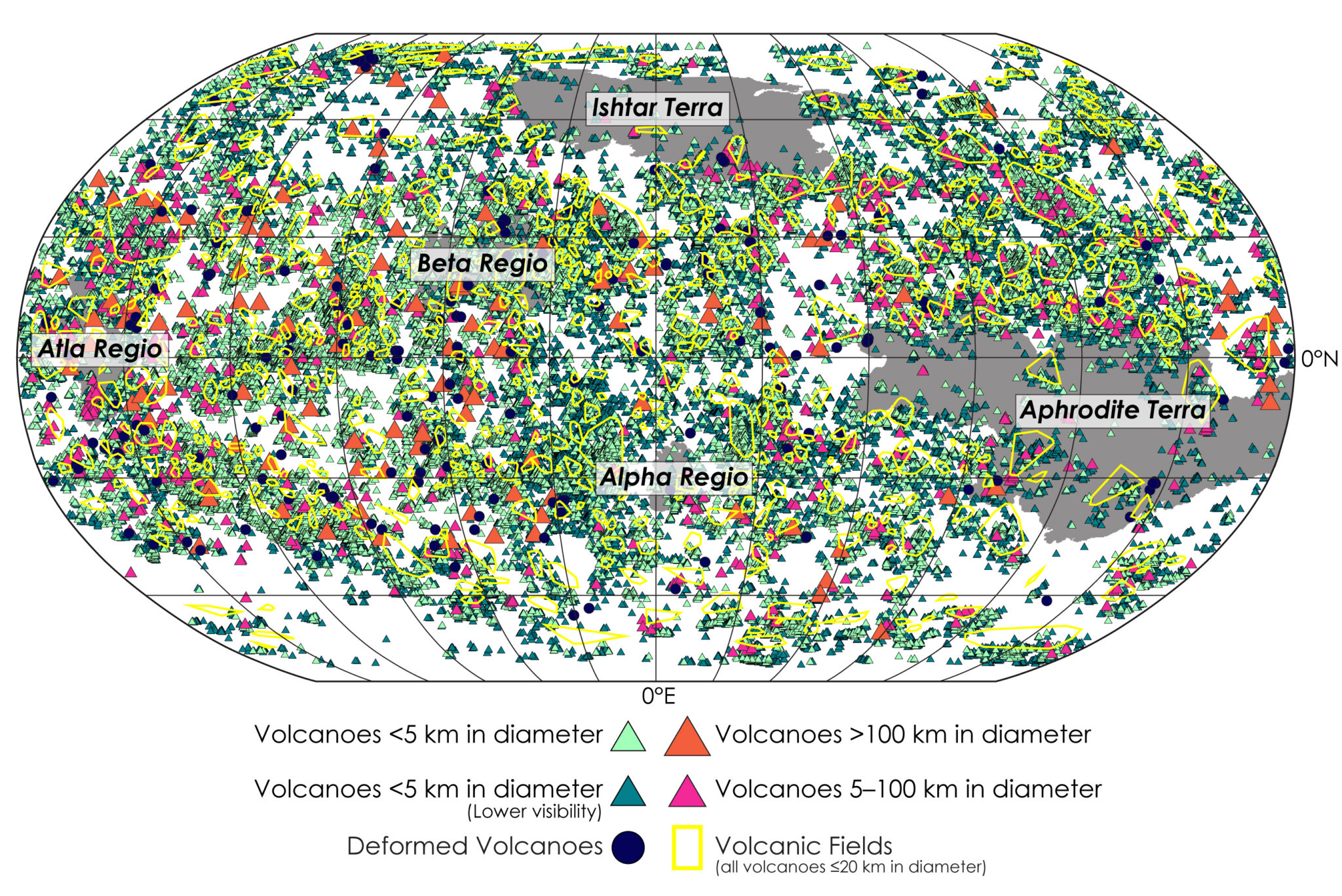
Venus’ surface is littered with vast lava plains and thousands of shield volcanoes, pancake domes, and other structures, suggesting intense volcanic activity shaped its surface, possibly with a global resurfacing event around 500 million years ago, and recent data strongly suggests some volcanoes are still active today, evidenced by changes in lava flows.
Abundance: Venus hosts over 1600 major volcanoes and potentially millions of smaller ones, covering about 80% of its surface.There are over 80,000[2] volcanoes on Venus detected through radar mapping.
Types: Most are shield volcanoes, but unique features like pancake domes (formed by thick lava and a flexible crust) and large lava channels are common. The surface is largely basaltic, similar to Earth’s ocean floor, indicating widespread lava flows.
Evidence for Activity
Magellan Data Analysis: Re-analysis of NASA’s Magellan radar data from the 1990s revealed changes in volcanic vents, suggesting eruptions occurred decades ago, like activity near Maat Mons.
Atmospheric Clues: Whiffs of volcanic gases in the atmosphere hint at ongoing activity.
Future Missions: Upcoming missions like VERITAS and DaVinci are expected to provide more definitive evidence of current volcanic processes.
Venus vs. Earth
Unlike Earth’s plate tectonics, Venus lacks long volcanic chains; its volcanism seems more distributed and linked to a dynamic, flexible crust.
Retrograde Rotation
Venus has some peculiar characteristics: it rotates very slowly and in the opposite direction to most planets (retrograde rotation), meaning the Sun rises in the west. A day on Venus (one rotation) takes 243 Earth days, which is actually longer than its year, or orbital period of 224.70 Earth days.
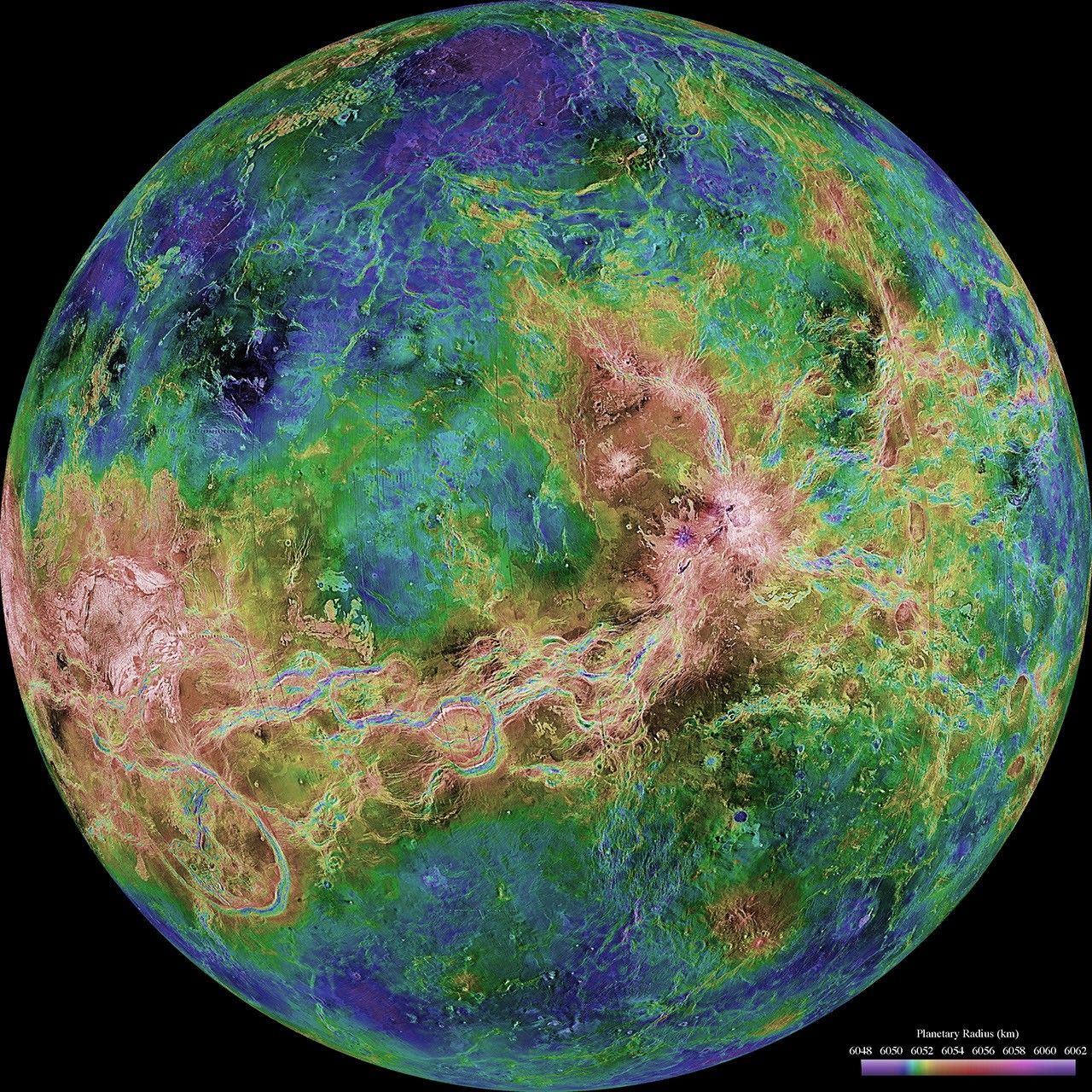
The surface has been mapped by radar and shows evidence of extensive volcanic activity, with thousands of volcanoes. The planet appears to have been resurfaced by volcanic activity relatively recently in geological terms – perhaps 300-500 million years ago.
JWST Confirms Venus’ Dust Cloud
Venus’s orbital space has been shown to have its own dust ring-cloud,[22] with a suspected origin either from Venus trailing asteroids,[23] interplanetary dust migrating in waves, or the remains of the Solar System’s circumstellar disc out of which its proto-planetary disc and then itself, the Solar planetary system, formed.[24]
The Surface of Venus
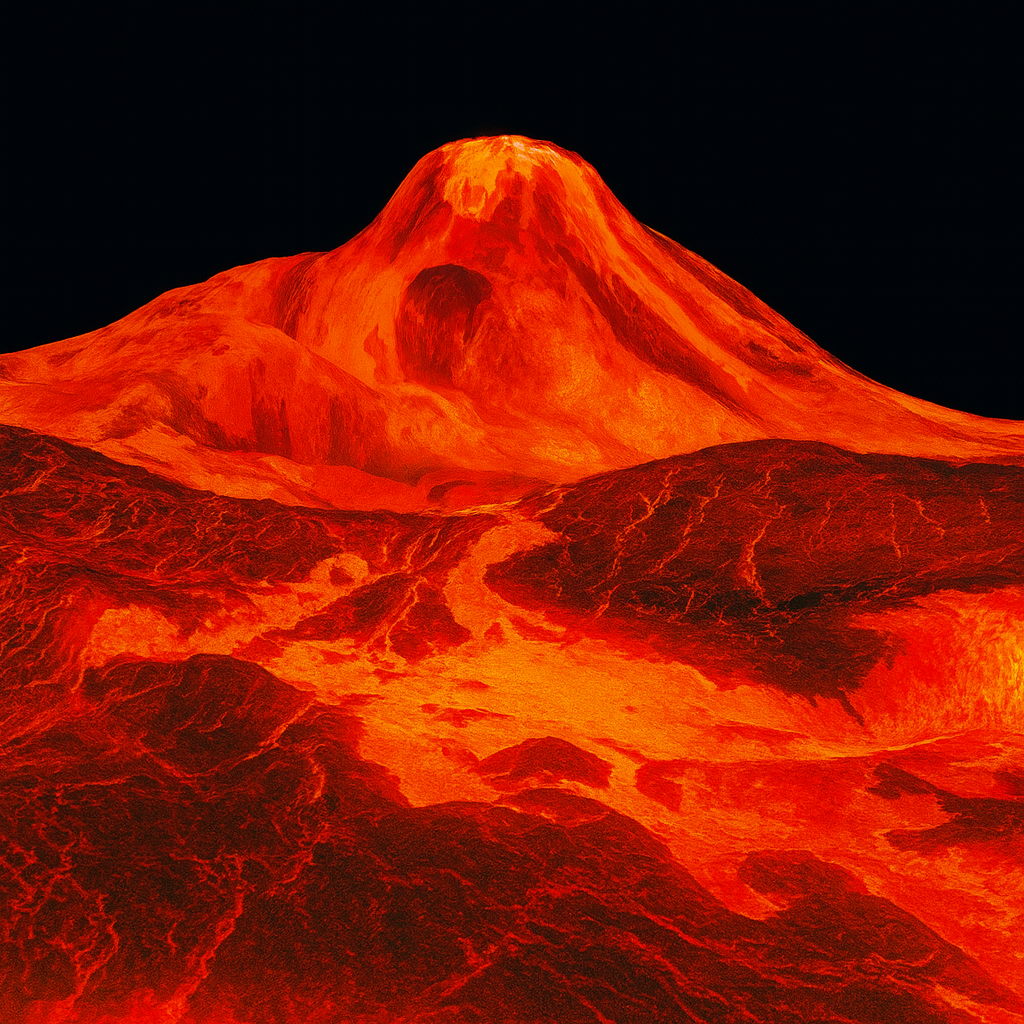
Maat Mons (Highest Volcano on Venus) – tells us a lot about the surface of Venus.